6.26 Why Systematic Trading Feels Emotionally Unsatisfying
A working system is boring to run, and that's the barrier. It stops paying you in control and thrills, and the emptiness is the edge: every reward removed was a channel a bias used to cost you money.
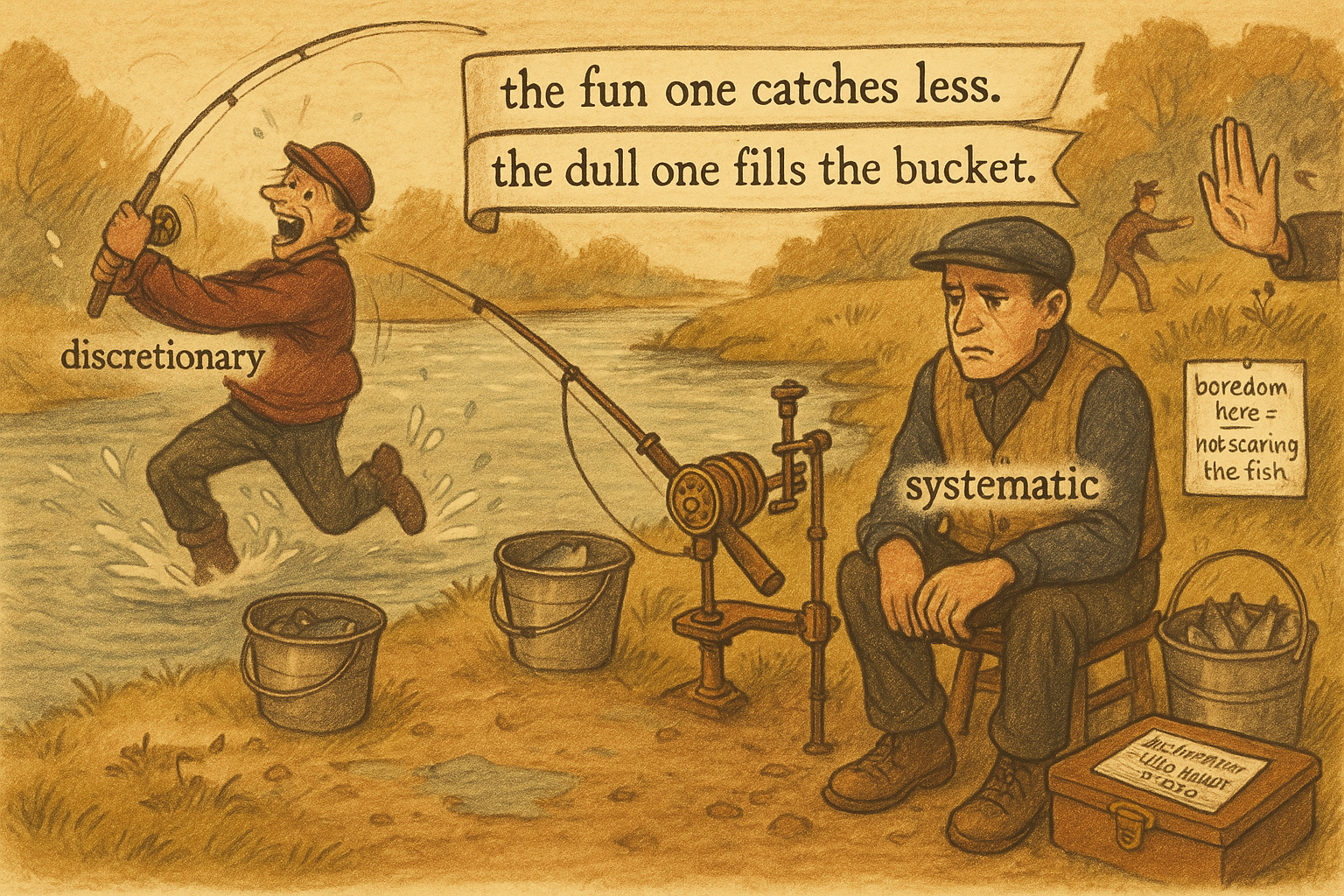
A working systematic strategy is boring to run. It makes its decisions without asking you, executes while you watch, and gives you nothing to do but follow it, and that nothing is unbearable to most people. The dirty secret of systematic trading is not that it is hard to build; it is that it is hard to tolerate, because it deprives you of every emotional reward that discretionary trading provided. The system's emotional emptiness is the price of its edge, and most traders are unwilling to pay it. "The Illusion of Control in Active Trading" explained the feeling that goes missing; this is about living without it and why that is the real barrier.
The rewards you lose
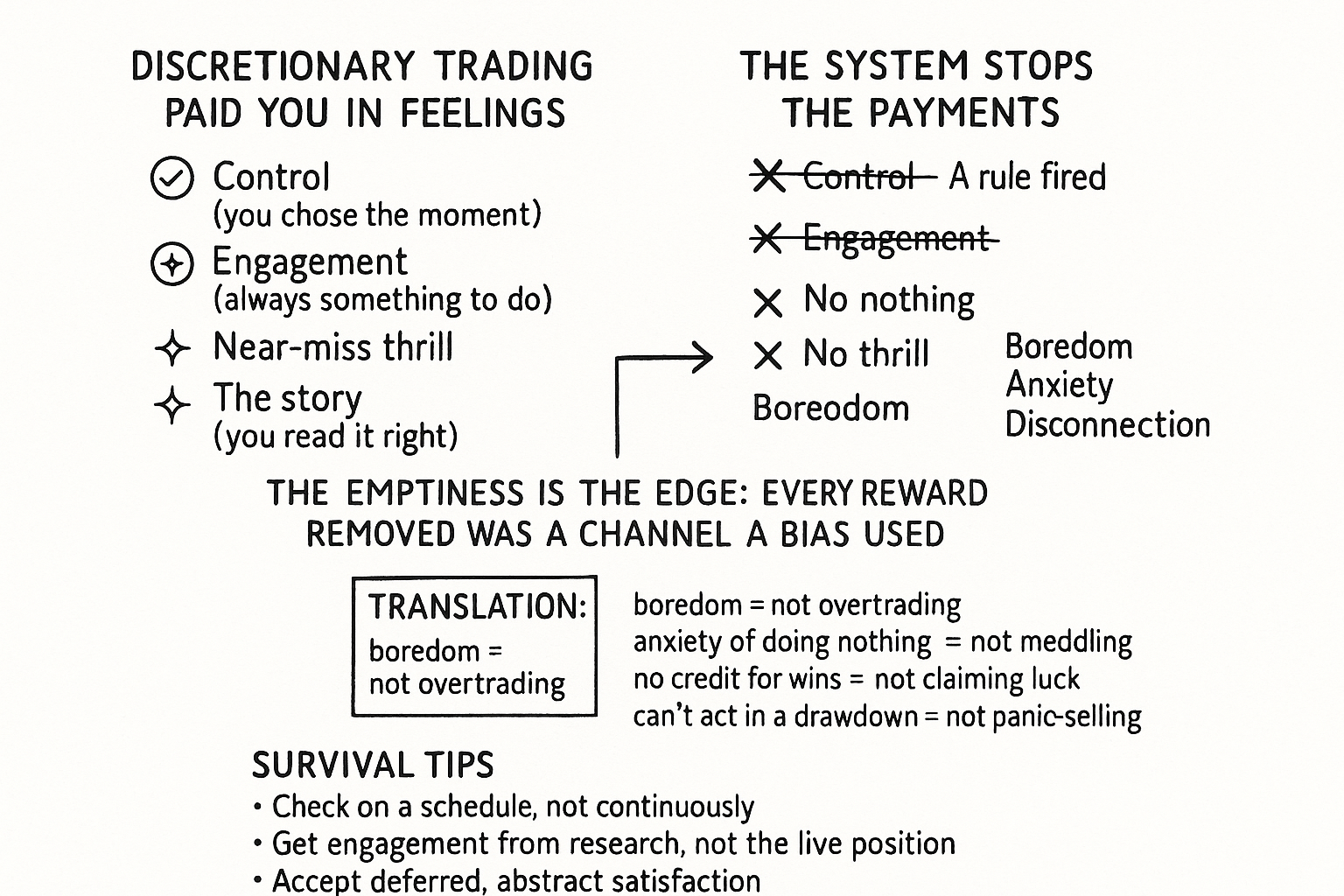
Discretionary trading paid you in feelings, and a good system stops the payments. You lose the feeling of control, the sense that you chose the moment and steered the outcome, replaced by a rule that chose for you. You lose the engagement, the constant involvement of watching, deciding, intervening, replaced by long stretches where the correct action is to do nothing. You lose the near-miss thrill and the fast-feedback rush that made active trading feel alive. You lose the story, the satisfying narrative of having read the market right, because the system has no narrative, only a rule that fired. What remains is a procedure you follow, and following a procedure delivers none of the dopamine that discretion did.
The absence is felt as a specific set of discomforts. Boredom, because there is nothing to do. Anxiety, because doing nothing feels irresponsible when money is at stake, as though you should be managing the position. Disconnection, because the wins do not feel earned, the system made them, not you, and the losses feel worse, suffered passively rather than fought. A systematic trader in a drawdown cannot even soothe himself with action; the system says hold, and holding while losing, with no intervention permitted, is one of the most psychologically punishing positions in trading.
The emptiness is the feature
The discomfort is not a flaw in systematic trading to be fixed; it is the direct consequence of the thing that makes it work. The system removes your in-the-moment judgment precisely because that judgment, as the rest of this pillar has shown, is corrupted by biases the moment money and emotion are involved. The emotional rewards of discretionary trading, the control, the engagement, the thrill, are the exact channels through which those biases operate, so a system that delivered those rewards would have to re-admit the biases. The emptiness and the edge are the same thing viewed from two sides: the system is unsatisfying because it has closed the doors the biases came through.
This reframes the discomfort. The boredom is the feeling of not overtrading. The anxiety of doing nothing is the feeling of not meddling with a position your rule says to hold. The disconnection from the wins is the feeling of not taking credit for luck, and from the losses, the feeling of not panic-selling the bottom. Every uncomfortable absence corresponds to a specific mistake you are not making. The feeling that you should be doing something is the bias asking to be let back in, and the discomfort of refusing it is the cost of keeping it out.
Surviving the emptiness
Knowing the emptiness is a feature does not make it comfortable, and the practical problem remains: traders abandon working systems because they cannot stand the lack of engagement, then return to discretionary trading and lose. The defenses are structural, not emotional. Reduce your contact with the system, because watching it tick invites the urge to intervene; check it on a schedule, not continuously, so there is less opportunity for the discomfort to drive an override. Find the engagement you crave somewhere other than the live position, in research, in building the next system, in improving the process, channeling the need to be active into work that does not corrupt the running strategy. And accept, going in, that the satisfaction of systematic trading is deferred and abstract, the equity curve over years, not the thrill of the individual trade, which is a worse emotional deal in the moment and a better financial one over time. The traders who last are the ones who stopped needing the trade to feel good, covered next in "Near Misses and Revenge Trading" and resolved in "How to Remove Yourself from Your Trading System".
Visualizing the emptiness
KEY POINTS
- A working systematic strategy is boring to run. It decides without you and leaves you nothing to do, and that nothing is the real barrier, not the difficulty of building it.
- The system stops paying you in feelings. You lose the control, the engagement, the near-miss thrill, and the story of having read the market right, and following a procedure delivers none of that dopamine.
- The absence shows up as boredom (nothing to do), anxiety (doing nothing feels irresponsible), and disconnection (wins feel unearned, losses feel suffered passively). Holding while losing with no intervention allowed is especially punishing.
- The discomfort is not a flaw to fix; it is the consequence of the thing that works. The emotional rewards of discretion were the channels the biases used, so a system that restored them would re-admit the biases.
- Every uncomfortable absence corresponds to a mistake you are not making: boredom is not overtrading, the urge to act is not meddling. The feeling that you should do something is the bias asking to be let back in.
- Survive it structurally: check the system on a schedule instead of continuously, channel your need for engagement into research rather than the live position, and accept that the satisfaction is deferred and abstract.
A note on AI. The ideas, research, analysis, and conclusions in this article are my own. I use AI tools to help with editing and wordsmithing, because English is not my first language, and I am not shy about that. AI-generated ideas and AI-assisted writing are not the same thing: the first is empty slop from a generic prompt, the second is a tool for communicating years of real research more clearly. Judge the work by its substance, not by whether software helped polish the prose.